Showing posts with label Festa Major. Show all posts

Wednesday, 22 August 2012

'Festa Major' in Sitges 2012 - Program Recommendations in English


The town festival of Sitges (Garraf, Barcelona) - Festa Major de Sant Bartomeu -, 2012 has already begun, but fortunately for all of us who love Catalan traditions and folk culture, the best parts are still to come during the two main days, August 23-24.

Here are the events where I will go, might go or, at least -, could think of going:

Wednesday, August 22

13:00; at Ateneu Popular de Sitges; address: C/ Sant Bartomeu, 40
Enjoy folk music with a drink - Concert: Vermut de Festa Major
Band: Filibusters

20:00; in the building Palau del Rei Moro
Photo opportunity – Catalan culture: Rehearsal of human towers (castells)
Team (colla): Colla Jove de Castellers de Sitges

21:00; on the beach platja de Sant Sebastià
Music - Concert
Band: Beatrix’ Drum and Bugle Corps

23:30; in the street passeig de la Ribera
Catalan culture – Concert: Havaneres (in Spanish: Habaneras)
Band: Els Cremats

Thursday, August 23 – La Vigilia

12:00; in the town centre
Catalan culture – Gralla music by several bands
A gralla is the wind instrument used to accompany the construction of human towers (castells)

14:00; on the beach platja de la Fragata
Opening ceremony – 21 mortars being fired off combined with bell ringing

14:00; in the square Cap de la Vila
Catalan culture – Sardana concert: the two pieces La Processó de Sant Bartomeu and La Festa Major
Band: Cobla Maricel

14:00; starting point in the square plaça de l’Ajuntament; Finish: in the garden Hort de Can Falç
Photo opportunity - Catalan culture; Parade with performances by firespitting monsters, devils dancing under fire, giants (gegants), the Moixiganga de Sitges and different folk dances more or less typical for Penedès.

17:45; in the square Cap de la Vila
Photo opportunity - Catalan culture: Human towers (castells)
Team (colla): Colla Jove de Castellers de Sitges

19:00; starting point in the street C/ Sant Josep; Finish: in the square plaça del Baluard
Photo opportunity - Catalan culture; Parade with performances by firespitting monsters, devils dancing under fire, giants, different folk dances and other cultural expressions.
Full route: C/ Sant Josep, C/ Artur Carbonell, C/ Sant Bartomeu, C/ Sant Gaudenci, C/ Sant Francesc, C/ Sant Bonaventura, C/ Sant Josep, C/ Parellades, pl. Cap de la Vila, C/ Major, pl. Ajuntament, pl. Baluard.

23:00; in the square Cap de la Vila
Photo opportunity – Fireworks
The Festa Major of Sitges has the most beautiful fireworks throughout Penedès, thanks to a unique background – the church on la Punta – and a 360 degree frame created by the houses along the beach walk, the piers, the many sailing boats out in the sea and the marina.
By: Pirotècnica Igual, S.A.

00:30 (approximately); on the stairs leading down from the church to the square plaça de la Fragata
Photo opportunity – Catalan culture: All cultural expressions - firespitting monsters, devils, giants and all the folk dances -, descend the steep stairs while performing.

01:30 (approximately); in the street passeig de la Ribera
Catalan culture – Sardana concert and dancing: Revetlla sardanista
Band: Cobla Sitgetana

Friday, August 24; Diada de Sant Bartomeu Apòstol – the patron saint of Sitges

Local public holiday

6:00; starting point in the square plaça del Baluard; finish in the square plaça de l’Ajuntament
Photo opportunity - Catalan culture: Early morning parade by many of the folk dances and other cultural expressions
Full route: pl. Baluard, C/ Fonollar, Baluard Vidal i Quadras, Port de n’Alegre, C/ Rafael Llopart, C/ Sant Damià, C/ Sant Sebastià, C/ Jesús, C/ Sant Bartomeu, C/ Sant Gaudenci, C/ Sant Josep, C/ Espalter, pl. Espanya, C/ Espanya, C/ Joan Tarrida, pl. Indústria, C/ Marquès de Montroig, C/ Parellades, pl. Cap de la Vila, C/ Major, pl. Ajuntament.

10:30; in the parish church Sant Bartomeu and Santa Tecla; address: pl. Baluard, S/N
Catholic traditions – Festa Major religious service held in honor of Sant Bartomeu

12:30 (approximately); starting point in the square plaça del Baluard; finish in the square plaça de l’Ajuntament
Photo opportunity - Catalan culture: "Leaving church parade" by the folk dances and other cultural expressions plus the bands Cobla Maricel and Suburband. Rounded off by a joint, simultaneous performance, followed by the national anthem of Catalonia, Els Segadors.

13:30 (approximately); in the square plaça de l’Ajuntament
Photo opportunity - Catalan culture: Human towers (castells)
Team (colla): Colla Jove de Castellers de Sitges

17:30; in the garden of Casino Prado; address: C/ Francesc Gumà, 6-14
Enjoy your afternoon coffee with music - Concert
Band: Cobla Maricel

17:30; in the garden of El Retiro; address: C/ Angel Vidal, 17
Enjoy your afternoon coffee with music - Concert
Band: Suburband

19:30; starting point and finish in the square plaça del Baluard.
Photo opportunity - Catalan culture; Procession with a figure of the patron saint Sant Bartomeu and performances by firespitting monsters, devils, giants (gegants), and all the folk dances more or less typical for Penedès. Rounded off by a joint performance by the giants, the firespitting monsters, the castellers etc.
Full route: pl Baluard, pl. Ajuntament, C/ d’en Bosc, C/ Davallada, C/ Barcelona, C/ Santiago Rusiñol, C/ Jesús, C/ Sant Bartomeu, C/ Sant Gaudenci, C/ Sant Francesc, pl. Cap de la Vila, C/ Parellades, C/ Bonaire, pg. de la Ribera, C/ Nou, C/ Major, pl. Ajuntament, pl. Baluard.

Sunday, August 26

18:30 (approximately); in the square plaça de l’Ajuntament
Photo opportunity - Catalan culture: Human towers (castells)
Teams (colles): Colla Jove de Castellers de Sitges, Castellers de les Roquetes and Minyons de Terrassa.
Minyons de Terrassa is one of the absolutely best castellers teams in Catalonia.

22:15; on the beach platja de Sant Sebastià
Catalan culture – Sardana concert and dancing: Revetlla sardanista de cloenda
Band: Cobla Sitgetana

Visca la Festa Major de Sitges!

- - -
Find here the full Festa Major program in Catalan and here the official short version in English, Catalan, French and Spanish.

- - -
By Erik Wirdheim – your guide in English and Swedish to the wine region Penedès (Catalonia, Spain).

Wednesday, 1 August 2012

Vilanova i la Geltrú Sees Best Human Towers so far in 2012

Vilanova i la Geltrú is celebrating its annual Town Festival – Festa Major – and last Saturday did we have the big exhibition of human towers. It started with all three teams entering the square with so called walking pillars (pilars caminants), where the team Colla Jove Xiquets de Tarragona excelled by turning their construction 450 degrees before dismantling it. After this followed a highly exiting day of human towers, at least for the two teams from Penedès.

We in the local team, Bordegassos de Vilanova, had lived several weeks of good rehearsals, so we were extremely ambitious and had decided to attempt two human towers which we have not built for years. We opened with a 4d8 (c), which was crowned but collapsed during the disassembly, but compensated for that by immediately achieving a 3d8 – a construction which our team had not managed to complete since 2005.


After that we made two attempts with 2d8f – for quite a few of us the first time ever we had been up on the base (pinya), to build a second support ring (folre). Both attempts fell before crowning, but the conclusion by most members is that we have this within reach. We have a very solid stem (tronc) for our 2d7 and just need to learn to manage the increased swaying you get when you add a folre. Bordegassos rounded off with two pillars of 5 levels and apart from the results of the day, we could also celebrate that there were so many of us and - above all - so many new and young faces. An important signal for the future!


When Castellers de Vilafranca visited us last year, they achieved their best exhibition until that date in 2011, and since they had the same target this time, expectations were high in the square plaça de la Vila – "Els Verds" are, after all, the by far best team in Catalonia. And - although that is not surprising, but still highly impressive - they delivered 100%. They opened with a rapid 3d9, followed by 2d9fm, whereby the spectators saw the first “gamma extra” construction of the day. After this they built a 4d9 and then raied the bar and rounded off with their first Pd8fm (again “gamma extra”, of course) for this year.


The third team, Colla Jove Xiquets de Tarragona, for their part could look back at a great exhibition here in 2011, but had to lower their expectations this time. A few recent falls with human towers of 9 levels had scared their top children (la canalla) and this made them opt for safe constructions. That still left them with the second best total of the today, since they easily completed 5d8, 3d8 and 4d8.


An additional nice memory I have from this day was how one casteller from Vilafranca used the expression “here at home” when he commented on the square in Vilanova. I believe that we have started to build a new nice spirit of mutual support and that feeling is confirmed when you look at the photos of the human towers and see the great amount of members who supported the other teams with their pinyes. I am personally one of the yellow dots in the photos of the giant Pd8fm but have problems identifying myself, since there were so many of us.

- - -
The Festa Major of Vilanova i la Geltú has started but the most traditional parts are still to come, during its main days August 4-5. Find here the full program in English.

- - -
Photo by Maite Gomà

Friday, 27 July 2012

Festa Major in Vilanova i la Geltrú – Full program in English

Today is the first day of the town festival (Festa Major) in Vilanova i la Geltrú (Garraf, Barcelona). Find here my version in English, including all events and also recommendations on things of interest to those of us who want to learn more about the wine region Penedès, the rest of Catalonia and the local culture here.

Some of the most exciting events take place already this weekend, notably the Fire-Run (Correfoc), the big exhibition of human towers (with Bordegassos de Vilanova, Castellers de Vilafranca and Colla Jove Xiquets de Tarragona) and the exhibition of Falcons (acrobatic human towers).

Having said this, the most traditional part of the celebration in next weekend, August 4-5. That is when the street of the town fills up with festival parades and performances of all our group of Catalan dances.

Welcome to Vilanova i la Geltrú and its Festa Major 2012!

Tuesday, 26 July 2011

Festa Major in Vilanova i la Geltrú 2011 - Recommendations in English on the Program

In a few days we will celebrate the Festa Major of Vilanova i la Geltrú 2011. Below you will find a summary of what I – from my originally Swedish and totally subjective perspective - would recommend. My focus is on folkculture (cultura popular) but that does not mean that I will not take part in events of other kinds.

The full official program in Catalan can be found here, but in case you want to receive personal advice, do not hesitate to comment on this post, contact me on Twitter or approach the human tower builders Bordegassos de Vilanova (in yellow shirts) and ask for “el suec” (the Swede). It is my firm opinion that the Festa Major of Vilanova i la Geltrú deserves to be discovered also by those of you who do not (yet) live here.

And, by the way: During the Festa Major, the pabordes (let us say, the organizing committee) asks everyone to dress up in white.

Friday, July 29
▫ 21:30 - a huge Catalan flag (la senyera) will be hung from the church tower in plaça Sant Antoni (on the northern side of our main church, at the top of the Rambla).
▫ 22:00 (approximately) – the correfoc (firerun) with fire spitting dragons and several teams of devils dancers (diables) will start from plaça de les Neus (on the southern side of the aforementioned church), proceed through the streets of the town centre and end in plaça de la Vila with a ceiling of fire (sostre de foc). In case you want to participate, make sure to put on old long sleeved and long legged clothes plus cover your hair. And do not be ashamed of putting in ear plugs – I will.

Saturday, July 30
▫ 11:00 – the Festa Major rowing challenge in Catalan llaguts (a boat type) on the beach Ribes Roges, in front of Estació Nàutica.
▫ 18:30 – the human tower exhibition of the Festa Major 2011. Starting with a parade down from plaça Pau Casals, followed by the actual exhibition (at approx. 19:00) in plaça de la Vila. Participants: the local team Bordegassos de Vilanova, the best team of Catalonia Castellers de Vilafranca (which have announced that they plan to build one construction from the so called gamma extra) and Colla Jove Xiquets de Tarragona.

Sunday, July 31
▫ 19:00 – the Falcons de Vilanova and their guests Meaka Dantza Taldea from Irun (Gipuzkoa) will parade through the town and then build acrobatic human towers in plaça de la Vila.

Monday, August 1
▫ 21:00 – Haveneres i Rom Cremat – "Songs from Havana" - performed by the group Bergantí rounded off by a glass of burnt rum – at the monument of Francesc Macià, at the bottom of Rambla de la Pau.

Tuesday, August 2
▫ 20:00 - the Festa Major Concert by the local music conservatory Mestre Montserrat, in plaça de la Vila.

Wednesday, August 3
▫ 18:00 – the smallest children of the town are invited to get rid of their pacifiers by giving them to the mulasses (giant donkeys), in plaça de la Vila.
▫ 19:00 – The three giant couples from Vilanova and la Geltrú will be paraded down (baixada dels gegants) from carrer Sant Josep, via the Rambla to plaça de la Vila, where they will all dance at the same time.
▫ After this giant performance (approximately at 20:30) the drum orchestra (batucada) Son da Rua will parade through the town.
▫ 21:00 – the Vilanova girls’ team of Ball de Bastons (Catalan stick dance) will celebrate their 25th anniversary by performing la Boja in plaça de les Cols.

Thursday, August 4
▫ 11:30 – writer Teresa Costa i Gramunt has been selected and will read the Festa Major invitation in the assembly hall of the town hall (ajuntament), in the plaça de la Vila.
▫ 12:00 – the main days of the Festa Major 2011 will start with 12 cannon ball shots being fired off in the same square, accompanied by bell ringing from all churches. After this, a there will be small performances first in this square and then throughout the town center.
▫ 18:30 – a big popular culture parade will take place in the town centre (cercavila de la Vigília), starting from plaça de les Casernes, proceeding via plaça de les Cols and plaça de les Neus, then following the Rambla and ending in plaça de la Vila, where all participating teams will make a joint performance at (approximately) 20:00.
▫ 23:00 – the Festa Major fireworks on the beach Ribes Roges.

Friday, August 5
▫ 9:00 – a popular culture parade (cercavila d’anada a ofici) will follow the pabordes and politicians on their way up to the church Sant Antoni, starting from plaça de la Vila and following C/ Caputxins. The part not to miss is the joint performance in plaça Sant Antoni, while local dignitaries enter the church.
▫ 10:00 – the Festa Major mass in the church Sant Antoni.
▫ 11:30 – a popular culture parade (cercavila de sortida d’ofici) will follow the pabordes and local politicians back to the plaça de la Vila, where there will be small performances (including human towers), starting at 12:30.
▫ 18:00 – a show of all Catalan folk dances practised in Vilanova, in the plaça de la Vila.
▫ 21:00 – the main popular culture parade (cercavila del Vot del Poble) will start in plaça de la Vila, follow C/ Caputxins downwards and then take to the North via the Rambla and end in plaça de les Neus. Once there, the inhabitants’ vow to be faithful to our Patron Saint la Mare de Deu de les Neus (Virgin Mary) will be followed by a joint performance and (what else?) fireworks.

Saturday, August 6
▫ 19:00 – Vilanova i la Geltrú’s childrens parade, based on local legends - la cercavila de l'Imaginari – will round off the popular culture part of the Festa Major 2011.

- - -
Find Vilanova's official Festa Major home page in Catalan here.

- - -
It is my plan to up-load video clips of the Festa Major in Vilanova i la Geltrú 2011. If I actually find the time to do so, then you will be able to find them here.

Tuesday, 31 August 2010

Top Human Towers at Sant Fèlix 2010

August 30, Catalonia's most important, annual casteller challenge - Diada de Sant Fèlix – was as usual celebrated in Vilafranca del Penedès, as a part of the local Festa Major. Here, only the four teams which regularly build human towers of nine levels are invited.

The "home team", Castellers de Vilafranca, already had a lead in the rankings and was in top shape. Boldly enough, they had decided to opt exclusively for special structures (so-called "gamma extra" in Catalan) and that paid off; three castells were built up and dsimantled (descarregats) - 4de9 amb l'agulla, 5de9 and pilar de 8 - and one construction - torre de 9 - was crowned, but collapsed during the disassembly. Taken together, that put on them on par with their year 2000 peformance, i.e. the team's seventh best all-time result. Therefore, it did not matter that this time they were far from making 3de10 - the important thing for me is that they keep on trying, again and again.


Minyons the Terrassa managed to crown one tower of the gamma extra - torre de 9 (c). They made an unsuccessful attempt to build a 5de9 but, by contrast, had no problem with 4de9 (d), 3de9 (d) and two pilars de 5 (d).

Colla Joves Xiquets de Valls have had a difficult season and must have been very content with their achievements this day. They opened with 5de8 (d) and could then, for the first time in two years, build and dismantle 4de9. Except for that they added 3de9 (c) and a pilar de 5 (d) to their score.

For Colla Vella dels Xiquets de Valls, finally, this will hopefully be remembered as a low-water mark. The team was expected to give Castellers Vilafranca a match, but almost everything went wrong. In the opening round, they failed with 3de9, and after that also with torre de 9. Their 4de9 was crowned but not disassembled, and the same happened with their pilar de 7 in the final round.

What I personally brought with me from this year's event was a feeling to have become an “insider” in the world of human towers, from the technicalities - not without pride, I happily answered questions from Catalans standing close to me - to the practicalities - as many other seasoned Sant Fèlix-visitors, I had with me a backpack full of food and drink. My only negative memories have to do with the teams’ results – a challenge like this gets less exciting when one team is so enormously much better than the others. I have not seen the press commenting on this, but judging from photos taken from above, Castellers de Vilafranca probably had twice as many "shirts" on the spot as the other teams and I guess that the guests were short of people since, this year, August 30 fell on a Monday.

Diada de Sant Fèlix is unique and everyone interested in Catalonia and Catalan culture ought to live it at least once. The event is admittedly long - this year it lasted for five hours - but do not let that deter you from visiting Vilafranca on this particular day: it is enough to see a number of castells to get a sense of the crowd, the expectations, the extremely high technical level and the joy when the teams are successful.

At the next big casteller event, the audience will exceptionally be able to sit down: Concurs de Castells in Tarragona on October 3. There – and with the exception of Minyons de Terrassa, who never participate - Catalonia's 12 best teams (plus two local teams from Tarragona) will show their skills. Castellers de Vilafranca are, yet again, the favourites for the title, but the battle for the places right below them will be very tough.

- - -

In my text about Sant Fèlix 2009, I explained why Vilafranca rightly claims that their plaça de la Vila is Catalonia's number one square for human towers – la plaça més castellera.

- - -

Diada de Sant Fèlix in the press:

LaVanguardia: Els Castellers de Vilafranca carreguen quatre castells de gamma extra per Sant Fèlix

Avui/ElPunt: Els verds, amos i senyors de la gamma extra

El3deVuit: Els Castellers de Vilafranca signen quatre castells de gamma extra en un Sant Fèlix maratonià

- - -

An introduction into the names of the human towers:

A pilar is a single pillar of people, standing on each other's shoulders. A pilar de 8 has eight levels.

A torre consists of two people per level, except for the top two ones. A torre de 9 has nine levels, the top two ones included.

Bigger castells have names such as 4de9 (4 by 9), where 4 indicates that it consist of four people per level (the top three ones - pom de dalt - excluded) and 9 that it has nine levels (the top three ones included).

The dificulty of a human tower can be increased if it is dismantled via a pilar, then called agulla (hence: 4de9 amb l'agulla).

Human towers of nine levels always have one additional support structure (folre), or even two (manilles), on top of the base (pinya).

To crown or assemble a human tower gives the main part of the score (c = carregat), but for full points it also has to be disassembled in a controlled way (d = descarregat).

Saturday, 31 July 2010

300 Years With Catalan Dancing Devils

Festa Major Vilanova 2010 039

During the Festa Major last year, did I try to explain that I, a native Swede, had difficulties to get accustomed to the Catalan fire culture, but that over the time, I have learnt to love it. Well, here in Vilanova i la Geltrú you almost have to, do you not?

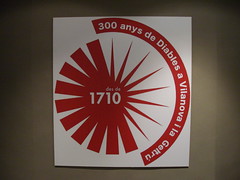
In this town’s church accounts from 1710 you can find a cost specified as 'fire crackers for the mulassa (monster donkey) and its accompanying devils', and that is why in 2010, our local devils celebrate their 300th anniversary. Back in history, the mulassa used to spit fire – a feature which subsequently has been dropped - and in 1779, the devils left her for the dragon, whom they kept company for half a century. Then, in 1832, they made a festival performance (entremès) in their own right during Arrivo - the Arrival of the Carnival King - and from that moment they are a separate entity – Ball de Diables de Vilanova i la Geltrú.

Festa Major Vilanova 2010 027

There have, admittedly, been ups and downs in people’s interest for diables. In the late 19th century, it became popular to practise sports and that resulted in what has been called a 'decadence' for the Catalan popular culture as a whole, including the ball de diables which ceased to exist in Vilanova. They returned only in 1947, when a few members of the social club Foment Vilanoví took up the tradition. The sixties again saw a number of Festes Majors without devils, but from 1972 and onwards they have been a stable element in the local popular culture. Vilanova currently houses six different teams: Ball de Diables de Vilanova, Tronats de Mar, Diablesses de la Geltrú, Ball d’Enveja, Diables de la Collada Sis Camins and Diables de ABP.

Festa Major Vilanova 2010 020

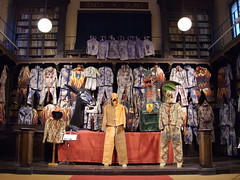
All teams wear colourful costumes which make them easy to identify. Those of Ball de Diables de Vilanova are always designed by local artists: in 1947 by Enric Cristòfol Ricart, in 1980 by Armand Cardona Torrandell; in 1995 by Joaquim Budesca and the current ones, from 2006, by Pep Duran.

Festa Major Vilanova 2010 006

What is typical for this part of Catalonia – Penedès and Camp de Tarragona – is that the devils make speeches. In a typical performance, Lucifer acts as the Master of Ceremonies, lets the devils read satirical verses and adds his own rhyming observations, before the Diablessa and the Archangel enter to round off the show. Earlier this year, there was in fact a parade where all verse-reading devil teams from Catalonia came together here in Vilanova: Ball de Diables de Vilafranca del Penedès, Ball de Diables de Sitges - Colla Vella, Ball de Diables de Torredembarra, Ball de Diables de Tarragona, Ball de Sant Miquel and Diables de la Riera de Gaià, Ball de Diables de Sant Quintí de Mediona, Ball de Diables del Vendrell, Ball de Diables de l'Arboç and, finally, Ball de Diables de Vilanova.

Yesterday we had a chance to see five local teams, plus diables from Mallorca and Tarragona plus the dragons of Vilanova and Geltrú dance around in the correfoc ("fire-run"). But the Festa has just started - on August 4, many teams will reappear in the Cercavila de la Vigilia and on August 5, Diables de Vilanova will make their annual stage performance and, of course, take part in the Cercavila del Vot del Poble.

Visca la Festa Major de Vilanova i la Geltrú!

- - -

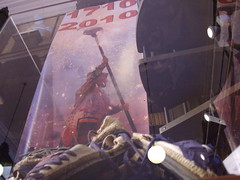
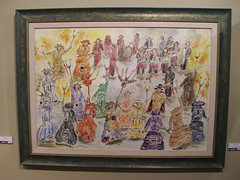
Des de 1710 Diables a Vilanova i la Geltrú - an exhibition of costumes, equipment and paintings related to ball de diables – can be seen in the Victor Balaguer Museum until September 5.

Festa Major Vilanova 2010 035

Festa Major Vilanova 2010 031

Festa Major Vilanova 2010 033

Sources and Inspiration:

Facebook: Ball de Diables de Vilanova i la Geltrú

Avui+ElPunt: Els Diables de Vilanova ocuparan divendres La Sala amb una exposició de vestits centenaris

Thursday, 15 July 2010

Human Towers Reaching the Town Hall Balcony of Barberà del Vallès


July 4 did we, Bordegassos de Vilanova, take part in the Festa Major celebrations of Barberà del Vallès. Since the performance was to start at 19:00 on a Sunday evening and relatively far from home, a bit too many team members had decided not to join. To make things worse, the performance was delayed for another hour, because of rain.

Bearing this in mind, we have all reason to be content with our results: 4de7, 3de7, torre de 6 and pilar de 5.


The Saballuts – Castellers de Sabadell – have built human towers of 8 levels this year. On this day some key members were missing, so they opted for torre de 7, 3 de 7 erected from below (aixecat per sota, in Catalan), 5de7 and pilar de 5.


Nois de la Torre from Torredembarra were the third team and managed to build 3de6 amb l'agulla, 4de6 amb l’agulla, torre de 6 and pilar de 5.

This was a performance with very little boring waiting time between the different constructions and, as the speaker rightly pointed out, all castells were assembled and disassembled on the first attempt. The speaker function, by the way, is something I would want to see introduced also in Penedès and Camp de Tarragona. It makes this art so much more inviting for those who have not yet had much contact with it.

The performance ended with a funny detail which I had so far only heard about but never seen in real life. The three teams simultaneously erected pillars of 4 levels right in front of the town hall so that the top people, with more or less assistance from other members, could climb up on the town hall balcony.

Friday, 4 September 2009

Catalonia's Most Typical Festa Major

Internationally, most people associate the Penedès with quality white wines, but this area is also famous for its strong popular culture. Nowhere is this more true than in Vilafranca del Penedès and especially during its Festa Major.


In 1699, the relics of the originally Italian martyr Felix of Girona were brought to Vilafranca and, after years of drought in the vineyards, it finally started to rain. Many elements nowadays associated with the town – the giants, the eagle, the devils and, above all, the dragon - trace back longer in history, but from 1776, when Sant Fèlix (Sant Feliu in other parts of Catalonia) was declared the new patron saint, the festa major celebrated to his honour follows the same structure.

Nowadays, the main sponsor of the event is the local government (ajuntament), but the vilafranquins as of tradition contribute directly as well through the so called capta. Historically, money used to be collected house by house, street by street.

On its first day, August 29, the festivity formally starts with bell ringing in all the churches, which in turn triggers the tronada - something an avarage Swede would describe as five minutes of unbearable noise, since one string of firecrackers after the other goes off along the rambla de la Nostra Senyora, but which is extremely appreciated here. As soon as the street has been cleared, the cultural teams (colles) start to move in the first performance parade (cercavila). Later in the evening, the same people take part in the first Sant Fèlix procession – l’entradeta - but this time they are followed by the statue of the Patron Saint, brought from the house of one of last year’s festa major organizers (l’administradors) to the Santa Maria church.


August 30 is the day of Sant Fèlix and starts with a solemn mass in the morning. Thereafter follows a commemoration at the monument of human tower builders (castellers) in the plaça de Jaume I. About noon, the focus switches to the plaça de la Vila, where a huge crowd of people sing the Catalan national anthem –els Segadors – and then see the castellers making their entry into the square in pillar formations. Only the four best ranked teams of Catalonia are allowed to take part in this high profile challenge and that usually means the Colla Vella dels Xiquets de Valls, the Colla Joves Xiquets de Valls, the Minyons de Terrassa and the Castellers de Vilafranca.

In the evening the same day follows a new Sant Fèlix procession (l’entrada). This time it makes a loop through the town but it is made up by the same cultural teams and, again, ends at the Santa Maria church, where all participants make a final joint performance - as intense as emotional. After that the saint is brought into the church and celebrated with a poetic elegy (goig).


August 31 is often called the’ day of the dances’ (dia dels balls), since – after another morning mass - there is a huge folk dance exhibition. Many of these dances can be found throughout the Penedès area, but Vilafranca has them all plus local specialties like the ball de figuetaires. An interesting detail is the fact that the ball de gitanes until 1999 used to be performed by real (roma) gypsies.

At the end of the show it is time for the Falcons de Vilafranca, in turn followed by more human towers – la diada de Sant Ramon - the chance for the Xicots de Vilafranca to, together with the Castellers de Vilafranca, show that also they are a team which easily reaches eight levels (colla de vuit), albeit not belonging to Catalonia's top four teams.

In the procession of this evening, the Sant Fèlix statue leaves the Santa Maria church and is paraded to the home of one of the current year’s administradors. During the year up to the next festa major, these will take turns keeping him in their houses.

The performance parade for children take place on September 1, when, after dark, there is also an opportunity to dance under fire in the ball de foc. On September 2, the festa major is symbolically rounded off with fireworks.

Vilafranca proudly claims to house the most typical festa major (la més típica) and most people agree that the conservation of its format, its rich and spectacular collection of monster animals (bestiari popular) and dances and, above all, the massive participation of the inhabitants makes it a model for the whole of Catalonia. This spring, it was voted one of the top 10 treasures of Catalonia’s and Andorra’s immaterial cultural heritage and it does, of course, form part of the Generalitat’s list of Festivities of National Interest.

Having started last year with the human towers of Sant Fèlix, this time I decided to try to capture as much Vilafranca atmosphere as possible – starting with the practice (assaig) by the Castellers de Vilafranca, followed by the cercavila, l’entradeta and, again, la Diada de Sant Fèlix. Although I am content, next year I will make sure not to miss l’Entrada, even if that means that I will have to fight for a restaurant table with all other people who are hungry after having watched castells for hours. That, I foresee, will not be my best memory from Vilafranca, but it does not matter. The more often I go here, the more often do I want to come back. Not only during the Festa Major.

- - -
Find the official Festa Major de Vilafranca del Penedès web-page here. My other main source for this entry was this article at festes.org.

- - -
Technorati tags: Castellers, Catalonia, Festa Major, Human Towers, Penedès, Vilafranca

Wednesday, 2 September 2009

State of the Art Human Towers at Sant Fèlix in Vilafranca


Sunday, August 30, was the Day of Sant Fèlix, the main exhibition of human towers during the festa major of Vilafranca del Penedès. This annual event draws a lot of spectators – this time as many as 15.000 people – since you are guaranteed to see the best castells of the season. The four teams (colles) which are invited to participate always have a solid record of building constructions with 9 levels (colles de nou) and this is the day and place when they give their best. Only the bi-annual Concurs de Castells in Tarragona is more prestigious in that sense.


The strong tradition of this day of human towers (diada castellera) can, in fact, be said to have rescued this art from disappearing. Historically, castells were very popular in the area from Tarragona to the Penedès, but in the late 19th century the masses started to prefer new social activities like sardana dancing (!) and sports. That resulted in a major decline, usually called the decadence (decadença), which lasted for some 50 years and lead to a reduction of levels in the towers built from nine to seven. During this period, the Vilafranquins were many times the only people in Catalonia who contracted castellers for their festa major and also actively helped to build them. This served as a motivation for the classic teams from Valls not to give up their skills. With that in mind, I clearly think that the plaça de la Vila here deserves its epithet as the "number one human tower square" ("la plaça més castellera").


This year especially the green coloured local team always made use of its right to try again when a tower collapsed and that made the program quite long (more than 4 hours). More than once did the audience – many of whom themselves practising castellers, judging from their t-shirts – whistle when the time for preparation felt exaggerated. Now, perfection has its price and we must not complain since in return we were received proofs of bravery and commitment in many impressive attempts to, completed or even successfully dismantled human towers, five of which from the highest category (la gamma extra).


The Castellers de Vilafranca opened the day with the – for them – consolidated 4 de 9 amb l’agulla (9 levels, 4 people per level and dismantled via a pillar) and made a breath taking attempt (intent) to build to build a 3 de 10 (10 levels, 3 people per level) in the second round. The Colla Joves Xiquets de Valls completed (carregat) their emblematic 5 de 9 amb folre (9 levels, 5 people per level) and then the Colla Vella dels Xiquets de Valls completed and dismantled (descarregat) a pillar of 8 levels (pilar de 8). The final attempt to a castell with an equivalent difficulty was an attempt by Vilafranca to build a 3 de 9 amb l’agulla.


Except for this, we were presented two torres de 9 (9 levels, 2 people per level) first by the Colla Vella dels Xiquets de Valls and then by the Castellers de Vilafranca – both completed and dismantled (descarregats). The fourth participating team – the Minyons de Terrassa – had to make do with a 3 de 9 and a 4 de 9 as their best achievements of the day – a disappointment for them but at the same time totally beyond reach for most other colles castelleres.

- - -
N.B: On August 31 – in a local human tower exhibition together with the Xicots de Vilafranca - the Castellers of Vilafranca managed to complete and dismantle the 3 de 9 amb l’agulla. That has never been done before.

- - -
Technorati tags: Castellers, Catalonia, Festa Major, Human Towers, Penedès, Vilafranca

Thursday, 27 August 2009

Sunday August 30, Vilafranca is the Place to Be

Coming Sunday, August 30, at 12:30 the Castellers de Vilafranca (in green shirts), the Colla Vella dels Xiquets de Valls (soft red), the Colla Joves Xiquets de Valls (red) and the Minyons de Terrassa (purple) will enter the plaça de la Vila of Vilafranca del Penedès in pillar formations. These are the top four human tower teams as of their 2009 results and they come here for the Diada de Sant Fèlix to enjoy themselves, but also to challenge each other.


Some people consider the vilafranquins pretentious when they claim that they have the "number one human tower square" of Catalonia (“la plaça més castellera”). Other people stress that building castells is a social activity, where you are not supposed to be competitive and, therefore, cannot say that a certain team (colla) is the best. I do not belong to either of these groups.


This year, the hosts have raised the bar by repeatedly communicating that they will make an attempt on a human tower of 10 levels and judging from how easily they assembled a “3 de 9” during their practice (assaig) yesterday, this is clearly within reach. Last year we did not see any constructions this high. Now, the outcome of the 2008 Human Tower Championship (Concurs de Castells) and the current ranking give at hand that “els Verds” are in the best shape to accomplish it. So, let us not be jealous but wish them all the best and, on Sunday, go to Vilafranca and scream ourselves hoarse when they make it!

- - -
Practical information: This event attracts a huge amount of visitors so do not enter the town centre, but make do with parking in the outskirts. Alternatively come here with the train Renfe Rodalies C4 - it takes less than an hour from Barcelona Sants. If you bring a child in a push chair, avoid the middle of the square since you will be locked in by the other spectators as soon as the performance starts.

- - -
Find the program of the Festa Major of Vilafranca del Penedès here. The full version is in Catalan, but there is a "Town Festivity - short guide" in English. By the way, take note that vilafranquins have registered both festamajor.cat and festamajor.info as theirs. Sitges was probably only minutes away, but obivously too late. And in Vilanova we are a bit sulky, because again and again we realize that our neighbours are smarter than we are.

- - -
Technorati tags: Castellers, Catalonia, Festa Major, Human Towers, Penedès, Vilafranca

Wednesday, 26 August 2009

The Sitges Procession in Honour of Sant Bartomeu


Foreigners tend to know Sitges as a international and posh tourist resort, especially popular among gay men, but this is a town of many dimensions. Sitges is also a very cultural town, careful to preserve its old Catalan traditions. Never is this aspect as obvious as during the Festa Major de Sant Bartomeu, a festivity which culminates on August 23-24 every year.


This festa major is celebrated with an impressive intensity and high participation and it is the only one of the comarca (county) Garraf which, since 1991, can be found on the Generalitat’s list of Traditional Festivities of National (i.e. Catalan) Interest. Most of the elements and the order of events has remained more or less unchanged for the last 150 years. The giants, what I assume is a dragon (tarasca) and the dances are mentioned in written sources from 1814 and from 1853 there is documentation of the devils, the stick dancers (bastoners), the gypsy dance (ball de gitanes), the flower garland dance (ball de cercolets) and the now lost so called ball de Sant Bartolomeu.


After some days of vacation in folk culture poor Sweden, I was happy to be able to see at least the final procession (processó en honor a sant Bartomeu), even more so since my wife went with me. Already before had I heard that the festa major parades of most Penedès towns bear a strong resemblance, but still I was surprised. This was very similar to what we are used to from Vilanova i la Geltrú.


Among the differences, I find it worth point out that the old giants of Sitges (gegants vells) are accompanied by two quite funny couples: first the small americanos Panchito and Panchito (he apparently always carrying the latest issue of the local newspaper l’Eco de Sitges) and then the tall gegants moros (the Arabs) Faluch and Laia.

The religious element is also more present here, on the one hand since a figure of the Patron Saint sant Bartomeu is being carried in front of the local politicians and dignitaries, and on the other hand, thanks to the moixiganga - a dance which tells the story about the life of Christ and for which Sitges is famous. Visca la Festa Major de Sitges!

- - -
On September 23 -i.e. only a month after the big one - Sitges celebrates its Festa Major Petita of Sant Tecla.

Read more in Catalan about the Festa Major de Sant Bartomeu here.

- - -

Technorati tags: Catalonia, Festa Major, Costa Daurada, Penedès, Sitges

Sunday, 23 August 2009

Cercavila de l'Imaginari - Legends and Stories from Vilanova i la Geltrú


On the last day of the local Festa Major, some 200 children from Vilanova i la Geltrú take part in a performance parade called la Cercavila de l’Imaginari. It consists of eight dances which tell and illustrate the following legends or true stories (click on the names of the dances to see the corresponding YouTube clips):

The Founding of the New Town (la fundació de la Vila Nova): Vilanova was founded by people from la Geltrú who did not like the feudal lord (played by a giant) and therefore built a new town (Vilanova, of course, means the “new town”) on the other side of the river. In 1274, it was acknowledged a town by king James I (Jaume I, the other giant).

Miralpeix: Legend has it that the Christians fooled the Saracens (saraïns) to leave a strategic castle here by drawing their attention to a huge fish (mira el peix means ‘look at the fish’).

The Fishermen (els Pescadors): This dance is a celebration to the role the fishing port has always played for this town.

The moon in a basket (la lluna en un cove): Vilanovins are said to be llunàtic;-moon crazy or, at least, overly stubborn. This is the legend about a boy who could not stop trying to catch the reflection of the moon in a basket.

The Caves of Ribes (les coves de Ribes): Legend has it that a huge snake kept a treasure in one of the caves of Ribes, and that all riders who tried to recuperate it were petrified after looking into its eyes. In the parade, instead of spitting fire this snake spits water.

The arrival of the railway (l’arribada del ferrocarril): Historically, people from here took their produce to Barcelona either by boat or via Vilafranca. This dance reminds us that only in 1881 did Vilanova really start to develop after local investor Gumà i Ferran had financed the construction of railway tunnels through the mountains of Garraf.

The Grapevine (el cep): This is a maypole dance about the vintage. The festa major of Vilanova is celebrated in honour of the Patron Saint Virgin Mary (la Mare de Deu de les Neus) who, in the 18th century, is said to have intervened when hailstorms year after year destroyed the harvest.

The Waterwheel (la Sínia): A celebration of agriculture where the rings of the dance has its inspiration in the movement of waterwheels.

Read more about the Cercavila de l'Imaginari in English on this blog and on the official web-page in Catalan and Spanish.

- - -
Technorati tags: Catalonia, Festa Major, Penedès, Vilanova

The Children's Parade and the End - Festa Major 2009, Day 9

The Festa Major activities on Thursday August 6 started late, at 19:00. For many vilanovins this is the big “day after” but it does have its own important program: the children’s performance parade.


In most Catalan towns, the children’s processions are merely copies of those performed by adults, albeit with lighter giants and not the noisiest of firecrackers. The one here in Vilanova – la Cercavila de l’imaginari - is different and, in my eyes, a model for how you recuperate and build a local culture. In 1999, it was created by a team lead by ethnologist Bienvé Moya and it consists of eight dances which illustrate the history of this town and its local legends. The music, dances and clothing have their origin in Catalan traditions, but are in fact recent creations. Find here a description of all the dances.

Within the Festa Major of Vilanova i la Geltrú, the Cercavila de l’Imaginari is a separate entity with an elaborate web-page available in both Catalan and Spanish. If you live here and have small children you should keep your eyes open for when the next year application forms are presented here. To participate is an adventure – the dances are rehearsed during the summer – but many children want to do so and only 200 are admitted through a lottery.


Before the last Festa Major day was over - in a plenary hall ceremony so popular that I was not even close to being able to enter – the organisers (pabordes) Policarpo Aparicio, David Fernànez, Eva Fuster, Roger Grau, Anton Manyer, Eloi Montcada and Núria Morte were thanked for their hard work. As far as I have seen in local media, the 2009 edition of this beautiful tradition was considered a major success, not at all marked by a negative crisis mood.

Personally, the fact that I was invited to write el bloc de la Festa made this my best Festa Major ever, above all since I met so many new people. Thanks to them I have learnt a lot – part of which I hope to have passed on here in my blog – and thanks to them have I finally decided to now actively take part in the local cultural life.

The Festa Major 2009 is over but, fortunately enough, the new pabordes - Lourdes Campins, Pilar Contreras, Ramon Enfadaque, Roser Jané, Xavier Llorens, Mireia Montserrat and Quim Tonda - have already started to outline the one for August 2010.

- - -
Technorati tags: Catalonia, Festa Major, Penedès, Vilanova

The Mass and the Most Important Parades - Festa Major 2009, Day 8


August 5 is a day when you have to get up relatively early in case you want to experience all traditional parts of the Festa Major of Vilanova. I was quite slow, but arrived in time to see the last part of the parade leaving the plaça de la Vila. Then I was recommended not to follow them, but to rush up and focus on how the teams make their entries into the church Sant Antoni Abat. How correct! To see giants and mulasses, followed by all our groups of bastoners and other dancers passing through the high portal in formation was a sight which I am very grateful not to have missed. (Thanks Maite! (Bordegassos))


After having seen so many young people in the streets, I was surprised to find the interior of the church totally dominated by the older part of the population. From a friend I learnt that most parade participants simply walk straight through to the door on the other side, and see the mass as a perfect opportunity to, finally, eat breakfast. The mass in itself was carried out in a joint effort by many priests and at the end all visitors have the chance to kiss the local patron saint, the Virgin Mary (la Mare de Deu de les neus).


The early evening of this day is celebrated with folk dances (balls populars) in the plaça de la Vila – a great show where the audience is presented with all variations of this tradition which are performed here in Vilanova. This year, there was an extra twist to the verses and steps of the flower garland dance (ball de cercolets), the tambourine dance (ball de panderos) the shepherd dance (pastorets), the Serrallonga dance, the Valencian dance, the gypsy dance (ball de gitanes), the ribbon dance (ball de cintes), the nans (the midget dance) and the Moixiganga de la Geltrú, since some political activists struggled with the wind to hang a huge senyera (the flag for Catalan independence) on the façade behind the stage.

Before the show was over, we were also treated to a joint performance by Vilanova's four teams of stick dancers (ball de bastons).


For the first time I stayed to watch the full performance of the local Petits Diables (small devils) and the Diables de Vilanova. I am not a fan of noise but the satiric verses read in between are well thought-through and those of us who still struggle with the Catalan language, can follow the text in the souvenir program sold on the occasion.


The late evening performance parade of this day (la cercavila del vot del poble) is also dedicated to the Virgin Mary and leads up to the town’s vow to be faithful to her for another year. After a first short stop in C/ Caputxins, I took my final position right below the church Sant Antoni Abat, since that is where all teams make a last effort to excel before they reach the goal. Participants of the moixiganga, the falcons and the castellers climb the church steps in suitable constructions while the stick dancers (bastoners) arrive totally sweaty after having danced non-stop for a good part of the Rambla.


Here, a priest (mossèn) and our mayor make short speeches and then - while fireworks light up the dark sky - all teams receive a last opportunity to perform before it is all over for this year: there is music, people dancing and building castells and there is fire and explosions from dragons and devils. If I would have to select one and only one favourite moment to symbolize the festa major of Vilanova i la Geltrú, then this would be it. The only sad detail is that it always leaves me with a strong feeling of emptiness. Visca la Festa Major de Vilanova i la Geltrú!


- - -
Technorati tags: Catalonia, Festa Major, Penedès, Vilanova